

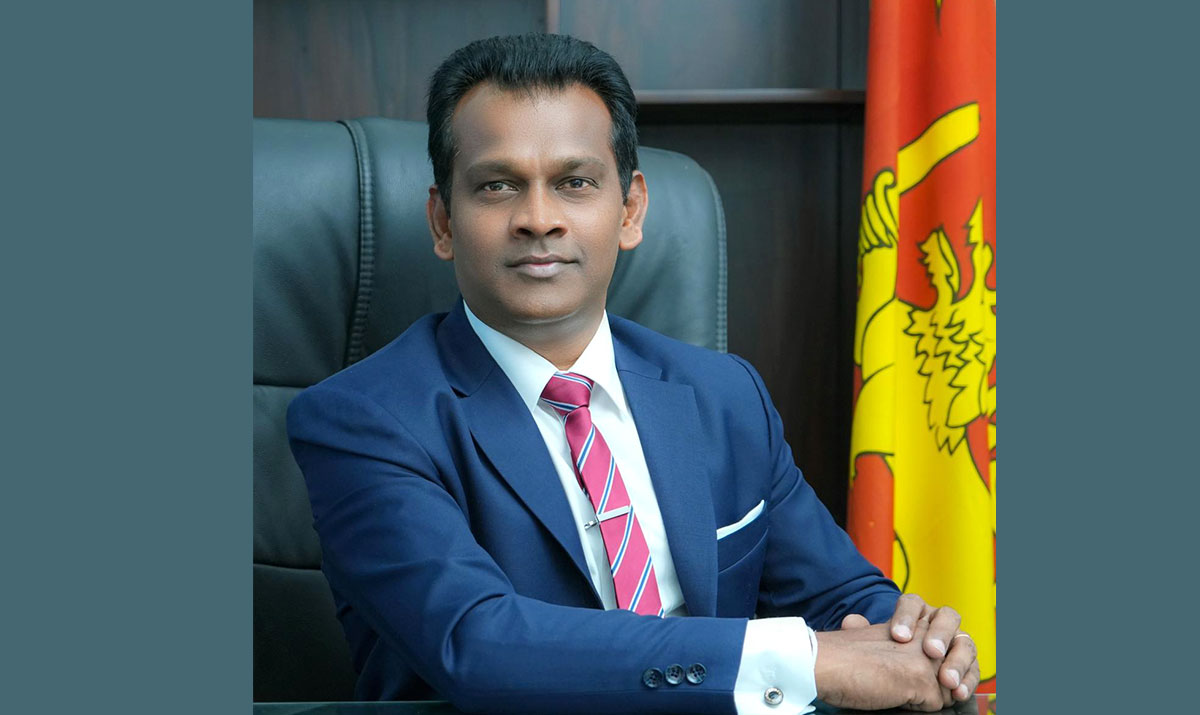
10 Nov Interview with Hon. Prof. Ruwan Ranasinghe, Deputy Minister of Tourism, Sri Lanka
Tourism is one of Sri Lanka’s largest foreign exchange earners, welcoming over 2.2 million visitors in 2023 and contributing nearly 5% of GDP, while employing more than 400,000 people directly and indirectly. Can you share with us numbers to indicate Sri Lanka’s popularity as a tourism destination and how do you envision the future of the tourism sector as a driver of sustainable economic growth?
Tourism is Sri Lanka’s third-largest foreign exchange earner, bringing in $3 billion last year. With our economy around $100 billion, we aim to increase tourism revenue to $5 billion this year, contributing about 5% of GDP. Sri Lanka has hosted commercial tourism since the 1960s. Initially, our main markets were the UK, France and Germany due to our colonial history but today with the growth of Asia, India has become our top market, following China’s rise in 2018.
This year, we plan to attract 3 million tourists, though airport bottlenecks may limit arrivals to around 2.56 million. Tourism plays a vital role in rebuilding our economy and is recognized as a key pillar of national development. Sri Lanka is famous for its genuine hospitality. Our people, especially in rural areas, offer warmth and friendliness that is natural and unique to the country. After several challenging years, our government has put Sri Lanka’s economy back on track. The IMF, World Bank and ADB have recognized us as one of the fastest-growing economies. Macro indicators show we are moving in the right direction.
Next year, we aim to take this growth to the grassroots, especially through tourism. Our vision is to build an inclusive and sustainable tourism economy. Currently, tourism is concentrated in a few areas, but over the next decade, we plan to expand it nationwide, creating opportunities for local communities.
Sri Lanka is an all-year-round destination. With clear West Coast beaches during one monsoon and the East Coast during the other, along with our hill country and heritage sites, there is always something for tourists to experience.
You have announced plans for a National Tourism Council to streamline coordination across state institutions and the private sector, aiming to remove bottlenecks and accelerate policy implementation. Could you share with us the main goals of this initiative and how it will strengthen Sri Lanka’s tourism governance and long-term planning?
Tourism in Sri Lanka is mainly driven by the private sector. Our ministry has run resorts for decades with little success — premium locations and resources were underutilized. We believe the government’s role should be to facilitate, regulate and monitor, not operate tourism businesses. One key challenge has been coordination across multiple government agencies — wildlife, forests, environment, archaeology, energy — which slows approvals and discourages investors.
To address this, we are establishing a National Tourism Council with top officials from all relevant bodies to make decisions efficiently. We are also revising the Tourism Act of 2005 to formalize this council. Meanwhile, we have set up a Presidential Task Force to drive tourism initiatives until the new act is in place. We are currently functioning as the proposed National Tourism Council through a Presidential Task Force until the new Tourism Act is enacted. A key issue is airport capacity — after six decades, no expansion has occurred. With only 40 flights per week, we are losing 10,000 visitors weekly, which prevents us from reaching our 3 million tourists target. The private sector will invest in temporary solutions, but permanent infrastructure improvements are needed.
At the ministry level, we have received cabinet approval for a national branding initiative. Since the 1960s, Sri Lanka has promoted tourism through various campaigns and slogans, but we have never built a strong international brand. Unlike Thailand, Vietnam or India with its long-running “Incredible India” campaign, Sri Lanka’s campaigns have often been short-term projects tied to political cycles. Our goal now is to create a consistent, long-term brand that resonates with both tourists and investors. Our government has cabinet approval to launch a national branding campaign highlighting Sri Lanka as a compact, diverse island. Here, you can see a Blue Whale in the ocean and, within an hour, encounter an elephant on land — something unique in the world. We are also developing new tourism products. The Pekoe Trail, a 320-kilometer route through the Hill Country’s colonial tea plantations, is one example, developed with private sector support and now promoted globally. Times magazine even listed it among the world’s top 10 tourism products.
Other initiatives include shipwreck diving in the Indian Ocean. We have 115 sites, including a 2nd-century BC wreck and a World War II aircraft carrier graveyard, offering a unique archaeological diving experience. These are part of our efforts to diversify Sri Lanka’s tourism offerings. Recently, we launched a seaplane service from the international airport to Beira Lake in Colombo and plan to restart the ferry between Rameshwaram, India and Talaimannar, Sri Lanka. We are also renovating our colonial-era railway stations to make travel more tourist-friendly. These initiatives aim to elevate Sri Lanka’s tourism appeal, targeting high-value markets while ensuring sustainable growth. Our focus is not just on increasing numbers but on creating quality experiences for visitors.
Sri Lanka boasts eight UNESCO World Heritage sites, more than 800 miles of coastline and is an unparalleled biodiversity hotspot. What steps are being taken to enhance the visitor experience, ensuring that foreign tourists not only enjoy their stay but also return with lasting memories?
Sri Lanka’s UNESCO Heritage sites include both cultural and nature-based attractions. We are working with international agencies like the Asian Development Bank (ADB) and World Bank on several projects. For example, at Sigiriya, high visitor traffic is affecting sustainability, so the ADB is funding development at nearby Pidurangala Rock to divert some visitors and enhance the experience. In Anuradhapura, the government has launched city branding initiatives and improved basic tourist facilities, including rest areas and washrooms. Under the ‘’Clean Sri Lanka” project, we plan to build 100 tourist resting areas and facilities across the island in the coming years to improve the visitor experience.
Sustainability is a key focus. We aim to make tourism inclusive, ensuring local communities benefit directly. The Sri Lanka Tourism Development Authority and the ministry are raising awareness, while government banks offer low-interest loans for small entrepreneurs to develop homestays. This approach provides economic opportunities for locals, authentic experiences for visitors and promotes environmental and socio-cultural sustainability, all while maintaining high-quality tourism.
In infrastructure, we aim to upgrade public transport for visitors. Our government has ordered 200 luxury buses to improve travel experiences and we plan to introduce more upcountry trains to meet demand from both tourists and locals. These initiatives enhance visitor experiences while supporting sustainable tourism growth.
Global travelers increasingly demand responsible tourism and Sri Lanka has already committed to sustainable practices. How is the Ministry ensuring that new development projects, infrastructure expansion and investment opportunities align with environmental protection and cultural preservation?
Our tourism initiatives prioritize responsible investment. Starting a tourism business in Sri Lanka requires over 29 certifications, which could take years to secure individually. To streamline this, the National Tourism Council and the Sri Lanka Tourism Development Authority act as a one-stop shop, helping investors obtain all necessary approvals — from environmental, cultural, wildlife and coastal authorities — within six months.
We also assess socio-cultural impacts and an expert committee reviews each project before giving the green light. This ensures investments are sustainable, compliant and beneficial for both communities and visitors. From a business perspective, investments through the board of investment enjoy significant benefits, including tax exemptions, profit repatriation and duty-free imports. Benefits vary based on investment size, from $10 million to $100 million. Sri Lanka now offers a clean and transparent investment environment. Investors can lease land, access government facilitation and launch projects without bureaucratic hurdles. Our goal is to provide a straightforward, trustworthy process to attract quality investors.
With digitalization transforming global travel from e-visas and online booking platforms to cashless payments and smart destination management systems, how is the Ministry leveraging technology to make Sri Lanka a more accessible, connected and tourist-friendly destination?
Sri Lanka recognizes digitalization as critical for advancing our economy. We established a Ministry of Digital Economy, led by Presidential Advisor Dr. Hans Wijayasuriya, and have begun digitizing tourism operations. Service providers can now make payments and file taxes digitally and in the coming weeks international digital wallets like WeChat will be integrated to ease tourist transactions.
Digitalization also strengthens promotions, AI-driven travel planning and online bookings. It helps formalize the economy by reducing untracked transactions. Over the next two years, we aim to fully digitize all tourism operations, from registrations and payments to marketing, making the sector more efficient, transparent and globally competitive.
How can strategic partnerships with global stakeholders help accelerate Sri Lanka’s ambition to become one of the world’s top sustainable travel destinations? What message would you share with international tourists and investors about why now is the perfect moment to experience Sri Lanka?
From 2024 to 2025, US tourist arrivals in Sri Lanka increased by 90%. Strategically located in the Indian Ocean, Sri Lanka offers strong connectivity, high literacy and English proficiency. We have free trade agreements with India, Thailand and Pakistan and an MOU with China, providing businesses access to major regional markets. With excellent infrastructure, hospitality and a business-friendly environment, Sri Lanka is ideal for US entrepreneurs and investors. We invite visitors to explore our beautiful island while seizing business opportunities.
Sorry, the comment form is closed at this time.