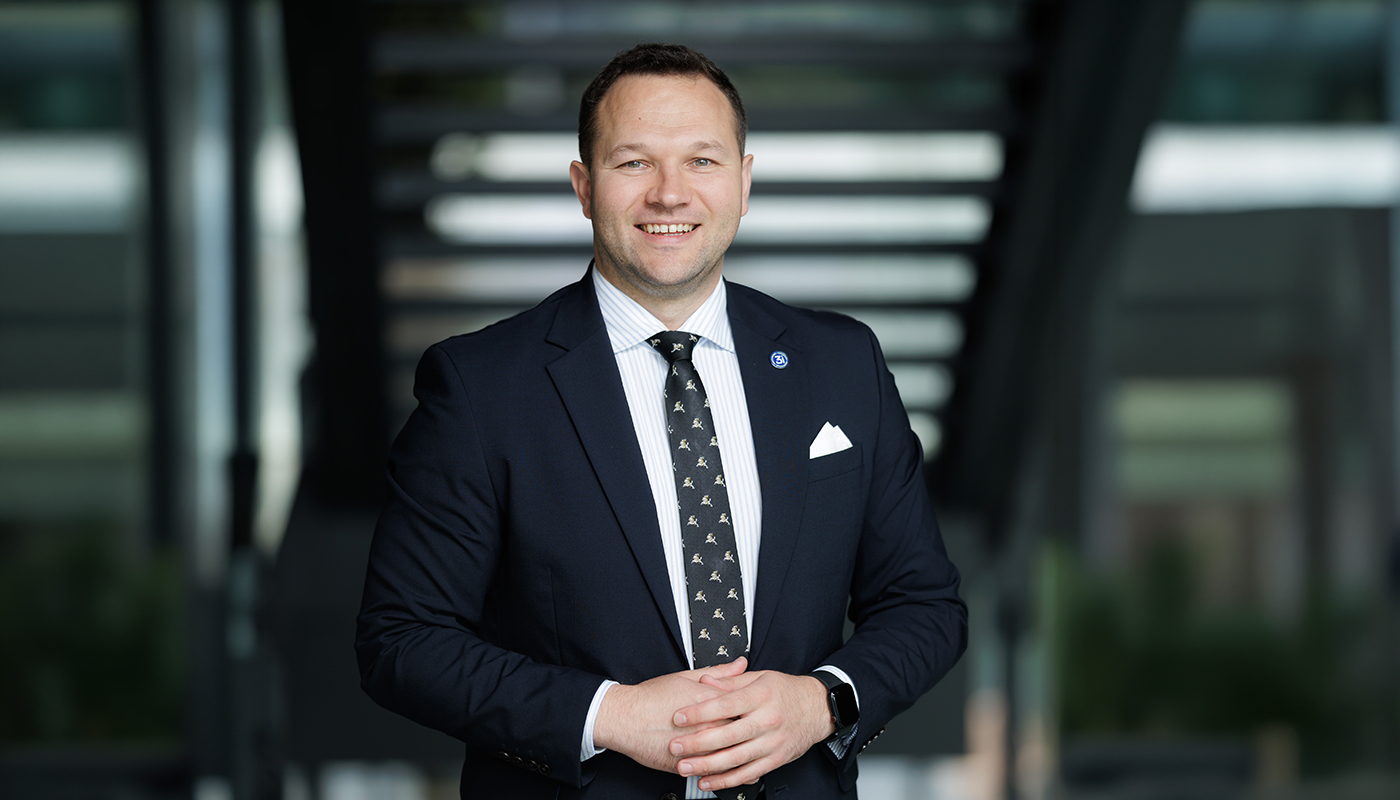
05 Aug Interview with Mr. Edvinas Grikšas, Minister of the Economy and Innovation of the Republic of Lithuania
Lithuania is increasingly associated with the concept of “Co-created in Lithuania.” What does this shift mean in practical terms for international partners?
“Co-created in Lithuania” reflects our ambition to position Lithuania not simply as a production or outsourcing location, but as a partner in innovation, investment, and joint development.
For international partners, this means working with an agile ecosystem in which companies, research institutions, and startups collaborate to develop new solutions. We believe the best outcomes come from bringing different capabilities together.
Lithuania is one of the fastest-growing economies in the European Union, with annual growth of around 3%. We have built internationally competitive sectors in fintech, life sciences, ICT, and advanced manufacturing, supported by a combination of scientific talent, entrepreneurship, and innovation.
Just as importantly, we are able to move quickly. Lithuania has one of the most digitalized public sectors in Europe, making administrative procedures efficient, transparent, and business-friendly for companies and investors.
Which sectors do you see as the main drivers of Lithuania’s innovation economy over the next five years?
Lithuania is pursuing a clear strategy for advancing high-technology industries, built around three key areas: biotechnology, ICT, and advanced manufacturing. More recently, the defense and security sector has also taken on greater importance.
Life sciences are among our most established sectors. We have internationally recognized companies, a growing ecosystem of technologically advanced startups, and an ambitious goal of generating 5% of Lithuania’s GDP from biotechnology by 2030.
ICT is another sector where Lithuania is performing particularly well. We are investing heavily in artificial intelligence through initiatives such as the AI Factory, created together with the European Commission, alongside our national Digital and AI Strategy and the launch of an AI Sandbox. Building on the success of our fintech sandbox, our ambition is to achieve similar progress in AI and position Lithuania as a regional AI hub and a gateway to Europe for AI companies, investors, and startups.
In the current European context, how can Lithuania contribute to technological sovereignty and resilience?
Lithuania’s defense and security is one of the areas experiencing rapid growth. Over the past year, revenues in the sector increased by 50%, supported by a dynamic ecosystem of startups and small and medium-sized enterprises bringing new solutions to the market.
Beyond defense, Lithuania also has competitive capabilities in strategic technology areas such as lasers, optics, electronics, and advanced manufacturing. Our companies export to more than 90 countries, and our laser solutions are used by leading universities and organizations, including NASA, the European Space Agency, and CERN.
Building on these strengths, Lithuania is actively participating in programs such as the European Defence Fund, Horizon Europe, and European Space Agency initiatives, working with partners to advance new technologies and strengthen its position in strategic sectors.
What place does international cooperation have in Lithuania’s broader economic and innovation strategy?
International cooperation is a key success factor for Lithuania. As an open and export-oriented economy, we understand that long-term growth depends on strong connections with global markets and meaningful international engagement. We have identified around 20-25 priority export and innovation markets where we aim to deepen relationships, exchange knowledge, and share best practices.
The space sector illustrates what this approach can achieve. During my time leading Lithuania’s delegation to the European Space Agency, we expanded our participation in ESA programs, established the European Space Agency Business Incubation Centre in Lithuania to support startups, and developed a Space Cluster and Space Hub within our innovation ecosystem.
How is your Ministry supporting startups in scaling from local success to global competitiveness?
Lithuania has built one of the fastest-growing startup ecosystems in Central and Eastern Europe, with more than 1,300 startups. We recently celebrated our fifth unicorn, and Lithuania now ranks first in the world for GDP per capita generated by unicorn companies. Another encouraging indicator is that only 26% of Lithuanian startups relocate their headquarters abroad, a considerably lower share than in many comparable markets.
Our role is to create the right conditions for startups to grow and scale while remaining connected to Lithuania. Through initiatives such as Startup Visa Lithuania, alongside incubation and acceleration programs, we support companies as they develop and expand.
Looking ahead, we aim to double the size of our startup community and create more companies capable of achieving global success.
How is Lithuania ensuring it has the skills needed to support future industries?
Ultimately, everything comes back to people. You can talk about investment, technology, or innovation, but talent is what makes the difference.
Lithuania has a deep pool of scientists and engineers, particularly in areas such as ICT and emerging technologies. We continue investing in our people and creating the conditions for researchers, startups, and companies to grow and compete internationally. This helps ensure that Lithuania remains well positioned to meet the needs of fast-growing industries.
How do you see the future of economic and innovation cooperation between Lithuania and Spain?
Spain is a very important partner for Lithuania. We are both NATO and EU members, and Lithuania’s upcoming EU Council Presidency will provide a platform to further advance our cooperation.
The opportunity comes from the way our economies complement one another. Spain brings scale, industrial capacity, leading companies, and extensive experience in areas such as renewable energy, particularly wind and solar. Lithuania offers a dynamic and flexible environment where new ideas and technologies can move quickly from concept to application.
Our bilateral trade already exceeds €100 million and continues to grow. While it remains concentrated largely in traditional sectors, ICT is becoming a more prominent part of this relationship.
The next step is to create more connections between companies, startups, and research communities in both countries, allowing them to work together on new ideas and international projects.
Sorry, the comment form is closed at this time.